😃 Subscribe for Post Emails:
Oct 20:
Writing Process & Planning,
Mindset & Motivation,
Marketing & Promotion,
Publishing & Career
Who Chases Whom? Write a Great Manuscript So Literary Agents Pursue You
Oct 6:
MCS & Story Development,
Writing Process & Planning,
Chapters & Openings
Pantsers Flail, Plotters Prevail: One Column with Three Keys to Unlock Your Plot
Sep 22:
MCS & Story Development,
Writing Process & Planning
Sketch Your Next Novel Our Way; Get Started in One Day
Sep 8:
MCS & Story Development,
Writing Process & Planning,
Feedback & Retelling
Good Spiraling: Conscientiously Add Ideation and Feedback to Write Better Novels
Aug 25:
MCS & Story Development,
Writing Process & Planning
Once Upon a Time? What Fairy Tales Teach Novelists About Memory and Writing
Aug 11:
Writing Process & Planning,
Chapters & Openings
Part 3: Mastering the 100,000-Word Novel Budget: Multivalue Paragraphs
Jul 28:
Writing Process & Planning,
Chapters & Openings
Part 2: Mastering the 100,000-Word Novel Budget: Satisfying Chapters
Jul 14:
MCS & Story Development,
Writing Process & Planning,
Chapters & Openings
Part 1: How to Master the 100,000-Word Novel Budget and Make Every Word Count
Jun 30:
Feedback & Retelling,
Writer Personas,
Mindset & Motivation
Isolation's Impact: Evidence that Authors Misjudge Their Work
Jun 16:
MCS & Story Development,
Chapters & Openings,
Feedback & Retelling
Unlocking Story Sense: The Differentiator Between Good and Great Authors
Jun 2:
Contests & Anthologies,
Publishing & Career
Creation vs. Generation: Drawing a Non-technical Red Line Between Human Authorship and AI
May 19:
Marketing & Promotion,
Publishing & Career
Author Bio: From Bore to Brand with an Irresistible Tidbit in 6 Steps
May 5:
Marketing & Promotion,
Publishing & Career
Five Steps to a better Novel Cover: The A.T.E. Roadmap
Apr 21:
Marketing & Promotion,
Publishing & Career
Writers as Solepreneurs: Why Finishing your Novel Opens the Best Door to a Rewarding Business
Apr 14:
Marketing & Promotion,
Publishing & Career
How Authors Can Succeed During Economic Downturns
Apr 8:
MCS & Story Development,
Writing Process & Planning,
Publishing & Career
Have Sales Chase You: Select Writing Projects with Passion and Potential
Mar 25:
Writing Process & Planning,
Chapters & Openings,
Feedback & Retelling
The Art of Orientation: Anchoring Your Reader at Every Chapter Break
Mar 11:
Feedback & Retelling,
Writer Personas,
Mindset & Motivation
How to Cultivate "Healthy Arrogance": Part 2: The Confidence You Need to Break Through as a Novelist
Feb 25:
Feedback & Retelling,
Writer Personas,
Mindset & Motivation
How to Cultivate "Healthy Arrogance": Part 1: What Not to Do
Feb 11:
MCS & Story Development,
Writing Process & Planning,
Feedback & Retelling
Stop Writing in a Straight Line: The Power of Nonlinear Novel Development
Jan 29:
Writing Process & Planning,
Feedback & Retelling
The Waiter Problem: Why Authors Need True Product Testing
Jan 15:
MCS & Story Development,
Writing Process & Planning,
Publishing & Career
Separability Secrets: Why Subpar Prose Sells & 3 Ways that Helps Your Novels
Dec 10:
MCS & Story Development,
Characters
Create Authentic, Investable Characters: A Free Comprehensive Online Developer
Dec 3:
MCS & Story Development,
Writing Process & Planning
How to Crystallize Your Novel’s Narrative: The 4 Stages of the Minimum Complete Story
Nov 12:
MCS & Story Development,
Writing Process & Planning,
Marketing & Promotion
The 9-Sentence Novel: How to Build a Minimum Complete Story (MCS)
Nov 5:
MCS & Story Development,
Writing Process & Planning,
Feedback & Retelling
Our Minimum Complete Story (MCS): Better Novels in 90 Seconds
Oct 29:
MCS & Story Development,
Characters
Example Character: Meet Pat the Firefighter
Oct 22:
MCS & Story Development,
Characters
Character Recipe Step 2: Blend Your Equation Ingredients to Relatable Beings
Oct 16:
MCS & Story Development,
Characters
Character Equation Three: Steal Distinctiveness from Referents You Know
Oct 9:
Feedback & Retelling,
Marketing & Promotion,
Publishing & Career
Turn Readers into Superfans: Build Two-Way Connections
Oct 1:
MCS & Story Development,
Characters
Character Equation Two: Take Advantage of Readers' Cultural Knowledge
Sep 23:
MCS & Story Development,
Characters
Character Equation One: Steal Parts of Yourself For A Publishable Character
Sep 17:
Feedback & Retelling,
Publishing & Career
The Publishability Index™: A Checklist for Your Story
Sep 11:
Chapters & Openings,
Feedback & Retelling,
Contests & Anthologies
Four Musts for Compelling First Chapters
Sep 4:
Writer Personas,
Mindset & Motivation
What's Your Writer Persona? Message Morgan
Aug 28:
Writer Personas,
Mindset & Motivation,
Publishing & Career
What's Your Writer Persona? Grandiose Gary
Aug 21:
Writer Personas,
Mindset & Motivation,
Publishing & Career
What's Your Writer Persona? Publication Pat
Aug 7:
Writer Personas,
Mindset & Motivation
What's Your Writer Persona? Motivation Max
Jul 30:
Writer Personas,
Mindset & Motivation
What's Your Writer Persona? Learning Logan
Jul 9:
MCS & Story Development,
Writing Process & Planning
Bardsy's MCS: A Small Story That Makes a Big Difference
Jun 25:
Chapters & Openings,
Feedback & Retelling
How to Hook Your Readers (and Keep Them) via Commonality
Jun 11:
Mindset & Motivation,
Publishing & Career
Stories, Sweat, and Tears: 6 Tips for Writers Dealing with Rejection
Jun 4:
Feedback & Retelling,
Marketing & Promotion
Effectively Using Beta Readers in 2025
May 21:
Writing Process & Planning,
Mindset & Motivation
Have Something to Show for Your Summer
May 15:
Writing Process & Planning,
Feedback & Retelling
A Guide to Bardsy's Directed Writing Groups
Apr 24:
Writing Process & Planning,
Feedback & Retelling,
Mindset & Motivation
What Can a Writing Coach Do for You?
Feb 23:
Mindset & Motivation,
Contests & Anthologies,
Publishing & Career
Thanks, but No Thanks: When Your Writing Gets Rejected
Feb 16:
Writing Process & Planning,
Feedback & Retelling,
Contests & Anthologies
Winning Revisions: Making Writing Feedback Work for You
Feb 5:
Writing Process & Planning,
Feedback & Retelling
Collecting Writing Feedback You Can Actually Use
Jan 22:
Chapters & Openings,
Feedback & Retelling,
Contests & Anthologies
Is My First Chapter a Winner?
Jan 15:
Marketing & Promotion,
Publishing & Career
Social Media for Authors: A Marketing Mindset
Dec 30:
Marketing & Promotion,
Publishing & Career
But I Don't Want to be an Influencer . . . Social Media for Authors
Dec 18:
Writer Personas,
Mindset & Motivation,
Publishing & Career
What's Your Writer Persona? Hobbyist Hayden + Career Cary
Dec 10:
Feedback & Retelling,
Writer Personas,
Mindset & Motivation
What's Your Writer Persona? Social Sam
Jun 12:
Writing Process & Planning,
Writer Personas,
Mindset & Motivation
Planning Your Success: We're Here to Help!
Jun 5:
Feedback & Retelling,
Contests & Anthologies,
Publishing & Career
Fear Not ChatGPT: Only Humans Can Judge Writing Contests (And Stories)
Apr 23:
Feedback & Retelling,
Contests & Anthologies,
Publishing & Career
Bardsy's 2024 Anthology Contest
Apr 10:
MCS & Story Development,
Writing Process & Planning,
Feedback & Retelling
How to Prototype Your Novel and Ensure Coherence via Short Stories
Mar 19:
MCS & Story Development,
Writing Process & Planning
The Art of Memoir: Exploring the Intersection of Truth and Storytelling
Jan 17:
Mindset & Motivation,
Publishing & Career
Decisions, Decisions: Choosing a Writing Conference & Maximizing Your Time
Jan 3:
Mindset & Motivation,
Publishing & Career
Writing Conferences: A Writer’s Paradise or a Wasted Weekend?
Sep 6:
Chapters & Openings,
Feedback & Retelling,
Contests & Anthologies
What Makes a First Chapter Anthology Contest Finalist??
Jul 19:
Contests & Anthologies,
Marketing & Promotion,
Publishing & Career
Become a Published Author: What Goes Into Self-Publishing on Amazon
Jul 5:
Contests & Anthologies,
Publishing & Career
What Anthology Publication Can Do for You
Jun 28:
Feedback & Retelling,
Contests & Anthologies
How to Win Writing Contests by Passing These 3 Tests
May 10:
Contests & Anthologies,
Publishing & Career
Your Guide to Entering—and Winning—Writing Contests
May 3:
Writing Process & Planning,
Feedback & Retelling
How Great Writing Workshops Work
Mar 1:
Feedback & Retelling,
Contests & Anthologies
The Best Feedback You Will Ever Receive
Feb 15:
Writer Personas,
Mindset & Motivation
Writing Personas: Ready Riley!
Feb 6:
Marketing & Promotion,
Publishing & Career
7 Tips for Writing an Author Bio That Gets You Noticed
Jan 31:
Marketing & Promotion,
Publishing & Career
Yes, You Need an Author Website—Even If You’re Unpublished
Jun 22:
Mindset & Motivation,
Contests & Anthologies,
Publishing & Career
Small Steps to Big Success with Bardsy Anthologies
Jun 15:
Writing Process & Planning,
Mindset & Motivation
You’ll Love Writing with Will.Power
Jun 8:
Writing Process & Planning,
Feedback & Retelling,
Contests & Anthologies
Submit Early for Success
May 10:
Writing Process & Planning,
Mindset & Motivation
Determine the Next Step in Your Writing
May 4:
Writing Process & Planning,
Mindset & Motivation
Break Through Your Blocks with Will.Power
Mar 24:
Contests & Anthologies,
Publishing & Career
Avoid Instant Disqualification
Dec 14:
Feedback & Retelling,
Contests & Anthologies
Give and Ye Shall Receive
Nov 8:
MCS & Story Development,
Writing Process & Planning,
Contests & Anthologies
Turn Your Short Story Into a Novel
Takeaway
Every novelist faces the same tradeoff: quality against time. Our answer is spiral development, a conscientious writing process built on three interlocking steps: ideation, writing, and feedback. Iterating through these steps in successive loops will produce a compelling novel more efficiently. So, make sure to integrate time for both ideation and feedback at regular intervals into your process.

Writing toward a goal, or spiral writing, which incorporates regular ideation and feedback, leads to compelling novels.

Today's post concentrates on improving your writing process, addressing the tradeoff that all novelists face: quality against time. We offer two main points: first, noveling, if that's a word, has a relatively well-defined goal: to write a hundred thousand coherent words. You may recall our initial definition of coherence: a novel's words combine to produce a wonderful reading experience, much like the gears in an old-fashioned pocket watch work together to tell time. Next, we leap from this insight to a more effective writing process, called spiral development. Put simply, it involves iterating through loops of ideation, writing, and feedback as you come closer and closer to a perfected manuscript. Doing spiral development conscientiously helps resolve the tradeoff between quality and time. We will conclude with two insights you can immediately apply to your writing.
Issue #1: Quality
Quality, as Ford's ads used to say, is job one. Rather than sloganeering, Bardsy supplies an extensive vision for great novels. Aligning your 100,000 or so words with this ideal leads to happy readers. On the other hand, missing, underdeveloped, or ill-fitting elements, i.e. a lack of coherence, leads to an unsatisfying reading experience and a novel that won't do well in a competitive market.
Quality has an overlooked side benefit. Believing in your work's quality boosts your self-confidence. Promotion almost always involves meeting people to talk about your story. While public speaking is the bane of many writers, knowing without doubt that your story pleases readers makes this task much easier. More broadly, the confidence certainty brings makes it more likely you will invest sufficient time and money in promoting your work.
Issue #2: Time
Quality takes time. You can't rush perfection, but everyone should try to accelerate their process. Why? Because writing careers require many novels. Estimates of how long it takes to produce a polished manuscript range from six months, which may zero out other life goals, up to eighteen months, a long time for avid fans to wait. With sufficient craft, including appropriate use of tools and feedback as we will discuss, you should produce one quality novel a year from scratch. Then, we recommend actively working on three projects: one in development, one in writing, and one in promotion.
Efficiency translates to writing novels quickly while maintaining quality. That said, efficiency is very much secondary. Much better to produce one great novel every few years than a string of crap. The best of both worlds comes from enhancing your process. Let's focus on two insights in this regard.
Building Toward a Clear Goal
Here is a basic tenet: everyone knows roughly what a novel should look like. It's a hundred thousand words, plus or minus. Bardsy's approach elaborates on this point, detailing exactly what compelling novels include. To take an obvious example, your novel needs the five story elements: character, world, conflict, theme, and plot. Reaching this goal sounds easy, right? Yes and no. The key to turning those words into a story is that every piece, including the five elements, has to be fully developed and work together to provide a happy reading experience. Think of a pocket watch.
Opening a pocket watch reveals an intricate mechanism: gears, escapements, and springs packed into a very tight space. More importantly, these parts fit together precisely to tell time. Should one part break, the entire mechanism grinds to a halt; the watch is broken, literally only working twice a day. Novels are arguably similar. A few minor mistakes may not do enough damage to make the reader unhappy, but past some point the reader gives up and moves on to a more rewarding work. In sum, your novel's parts must cohere, telling a story in words, to win devoted fans.
Spiral Development
Spiral development is a term engineers use that adapts well to producing novels, especially achieving coherence. This model centers on iteration, which should sound familiar. Authors necessarily iterate; we write successive drafts that get better and better until the novel is done. Now, let's examine what happens at each stage more carefully. Each draft depends on three interrelated steps: first, ideation, which is a sophisticated way to say thought; second, writing, naturally; and, third, feedback. Feedback, which can come from your authorial reflection or from others, assesses writing to identify what works and what doesn't, given the "happy reader" ideal.
This setup should make the one point obvious: ideation and feedback are as important as writing. Efficiency aside, producing a quality novel demands both. Absent ideation, writing tends to be linear, at best, or incoherent, at worst. The so-called pantser (or gardener) serves as an example of what not to do; supposedly, they put little thought into what they write. Pantsing can only end in two ways. Either the author will revise the last draft into a coherent manuscript or their stream of consciousness will fail to please readers. All writers do some thinking, so this dichotomy oversimplifies. Nevertheless, sporadic thought is not enough. Ideation needs to be fully integrated into your process.
The same goes for feedback, which parallels thinking in that everyone recognizes its import. Again, however, it needs to be systematically integrated into your process. Overall, then, good noveling looks like this:
Single Ideation-Writing-Feedback Loop
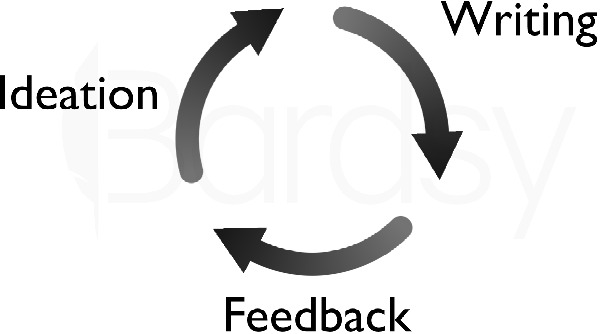
Thus, successful writing calls for a loop where writing, ideation, and feedback continually feed each other. Thought leads to writing, which leads to feedback, which leads to more thought and, then, more writing and so on.
Crucially (and thankfully), this cycle ends. Here's the payoff: when looked at from the side and over time, your writing process should look like this:
Spiral Writing Process
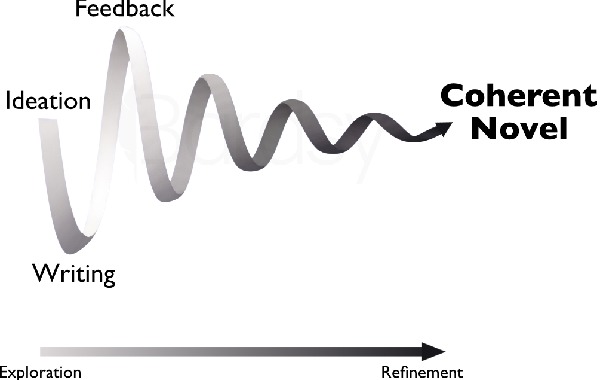
The spiral image above shows the process loop repeated over time. The effort swings from ideation to writing to feedback, leading to the next loop. With enough thought and good feedback, each draft improves, meaning the loops get smaller. Put another way, each iteration gets closer to the goal. Hence, the narrowing spiral: the process zeros in on a coherent novel.
Of course, sometimes the writing process gets messy or inspiration may strike, causing the loop's diameter to increase. Overall, though, big changes tend to occur at the beginning of a project with smaller ones coming at the end, creating this pattern. From another angle, noveling isn't an aimless process; it's conscientious and directed. You know the goal and keep at it, coming closer and closer until you succeed and have the fabulous novel on the right. Spiraling is an apt metaphor for an effective writing process. Let's consider two of this metaphor's implications.
Lesson 1: Thinking Time Counts
The most important lesson: time spent thinking, which includes using tools like Bardsy's, is as important as time spent writing. We've heard authors boast of writing ten thousand words a week, which is great. However, that's not the goal. The goal is a coherent novel. Quality requires ideation, which takes time and effort, sometimes more than actually typing. To throw out a number, a thousand quality words may be worth as much or more than five thousand typed less rigorously. So, give yourself credit for time spent thinking and planning.
Lesson 2: Trust Yourself and Others to Make Regular Assessments
That same premium on thinking carries into a second lesson on trust. It can be hard to trust yourself specifically to know when your work is good enough or done. Take heart! In our experience, it's extremely rare for a serious writer to make gross errors in judgment. The ones we do see generally stem from arrogance, as we've discussed elsewhere. So long as you honestly adopt the reader's perspective, you should be able to determine what adds value and where your writing falls short. At the same time, you should also regularly seek feedback from others where your own reflection falls short. To conclude, adding regular feedback and regular ideation to your writing process produces better novels more efficiently.
We look forward to your thoughts or questions at joinus@bardsy.com.